A Return to Craft: Traditional Kitchens for Modern Riviera Homes
- Bespoke Kitchens
- Interior Design
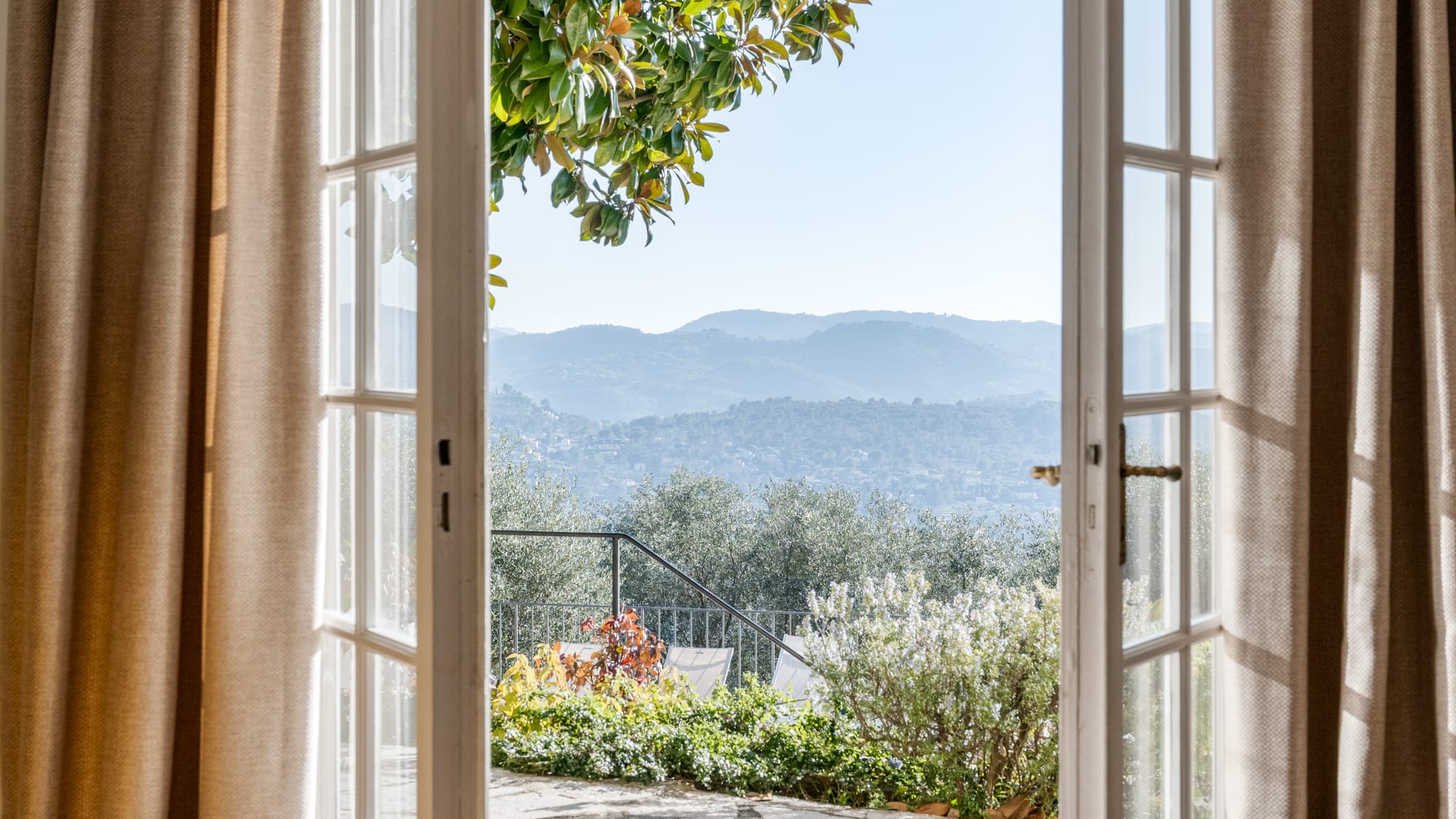
On the French Riviera, we are used to sleek villas and airy minimalism. Yet more and more, the homeowners I meet are asking for something more grounded: tactile materials, slower living, and rooms that hold feeling as much as function.
That is where traditional kitchens come in. Not as relics of the past, but as a considered, modern choice. Built properly and finished by hand in a heritage colour, they don’t compete with contemporary life. They quietly enhance it.
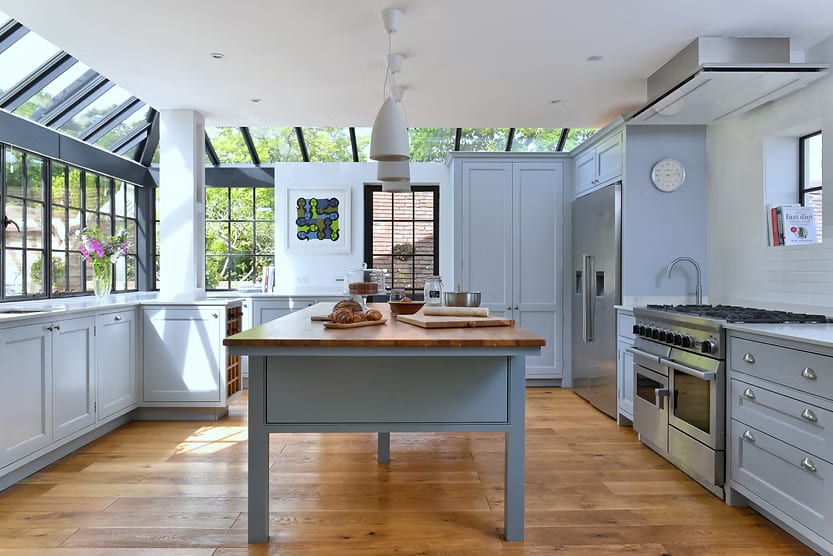
To show what I mean, I’m sharing one of my favourite traditional kitchens: a hand-painted, in-frame kitchen in the green suburbs of Weybridge, Surrey, designed for a family who valued quality and tranquillity. This is its story.
The brief: a kitchen built around daily rituals
The family wanted a kitchen that would last for decades and fit the way they actually live: breakfasts together, weekend baking, friends around the island. So before drawing a single cupboard, I start with the rituals. What happens first thing in the morning? Where do the plates go? Who cooks, and who keeps them company?
In-frame kitchens follow a slower rhythm, but that doesn’t mean they lack innovation. Some pair a range cooker with a fireclay sink for countryside warmth. Others hide induction hobs, minimalist sinks and streamlined appliances behind traditional doors. Tradition and high-end contemporary choices sit together beautifully.
A floating island at the heart
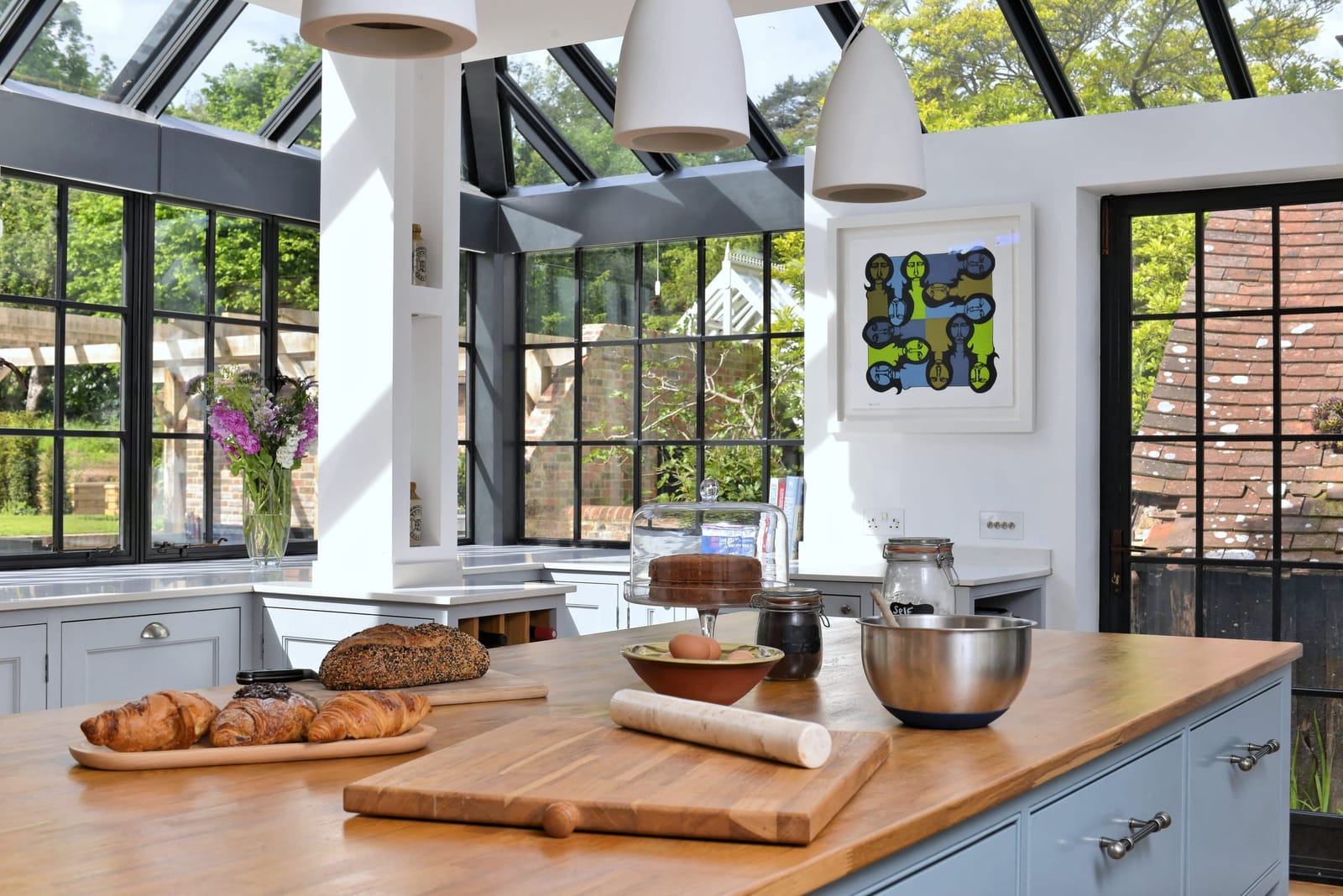
The central island became the focal point. Engineered around a concealed internal metal structure, it appears to float above the oak floor while staying exceptionally sturdy.
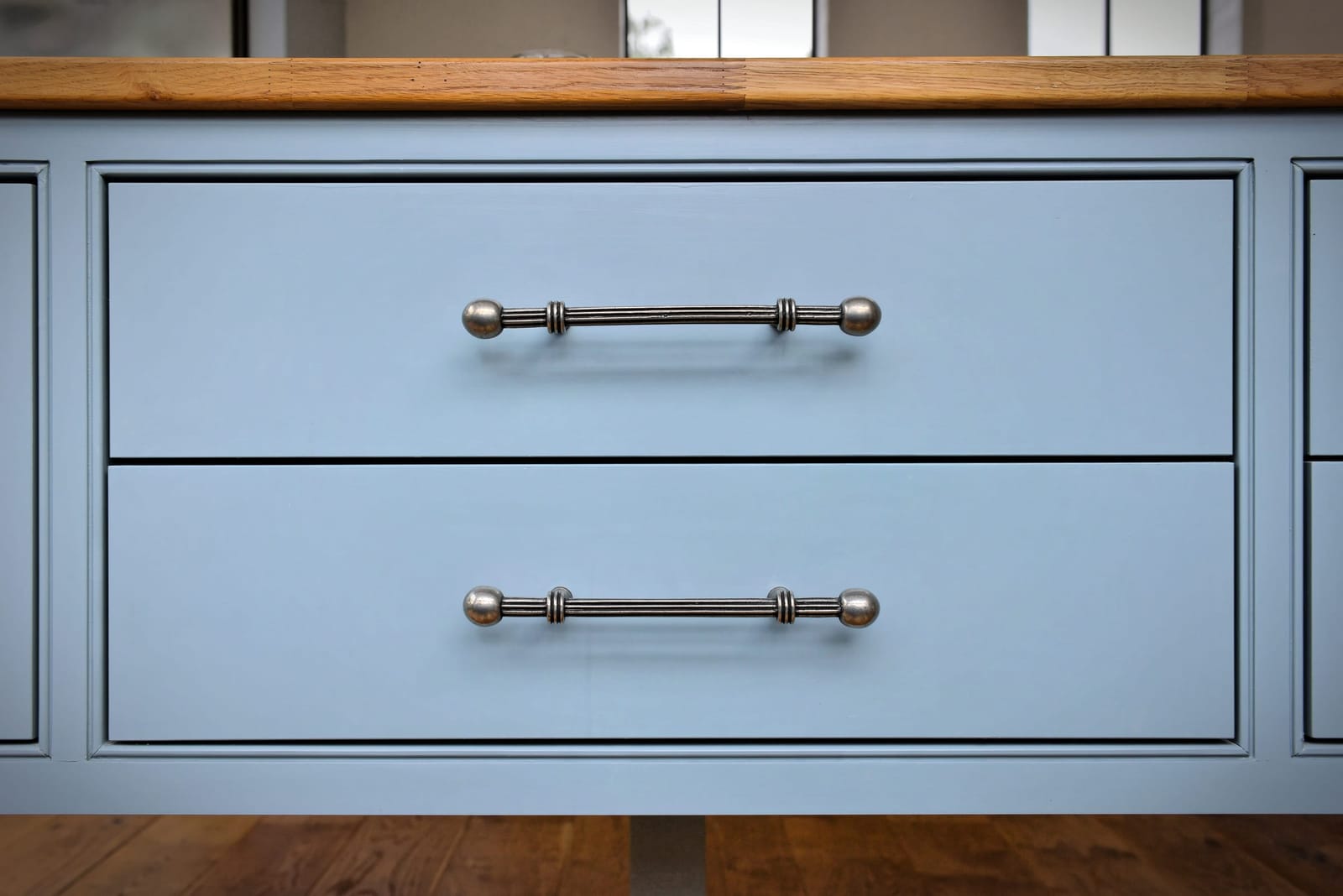
Every drawer has a purpose: breakfast prep, serving, cooking support. A dedicated drawer near the sink holds spare cutlery and table-setting essentials, so the move from cooking to setting the table feels effortless. A tea and coffee drawer sits close to a boiling water tap beside the range cooker, which also means pots can be filled in place instead of carried across the room.
A pantry designed from the inside out
The pantry was built with the same care. I always begin by understanding what truly needs to live there: beyond spices, that often means breakfast appliances, integrated sockets and pull-out platforms for heavier items.
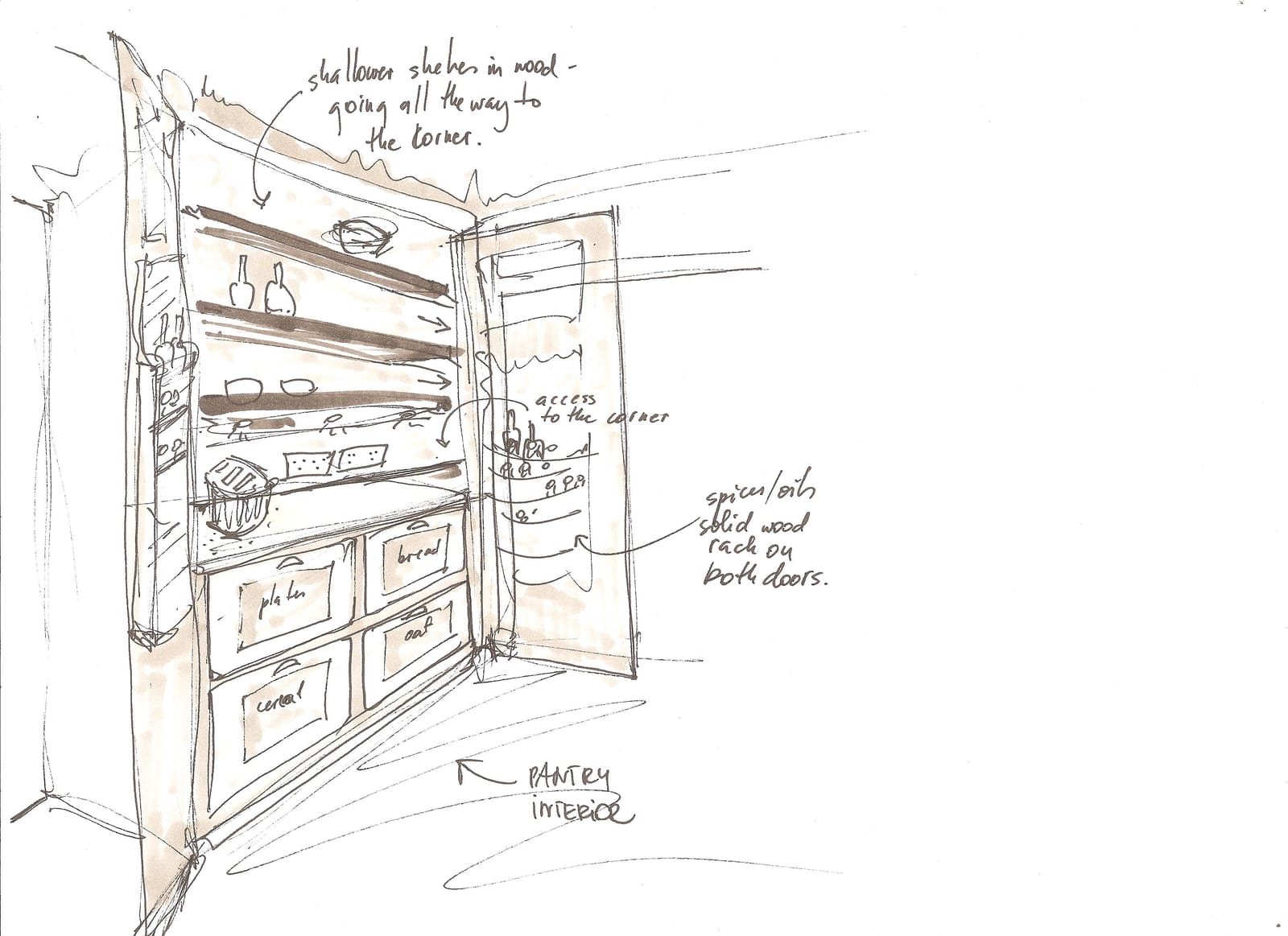
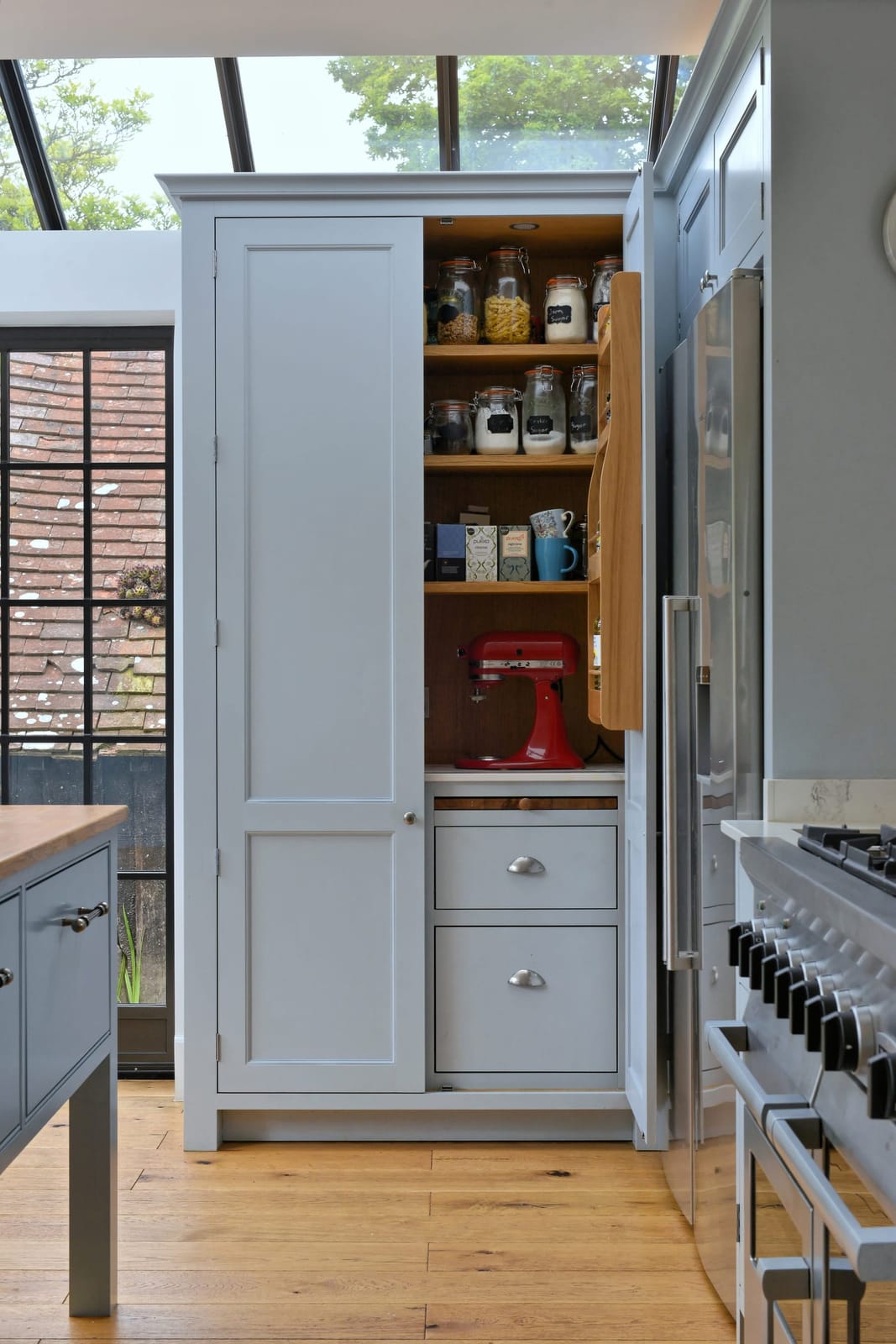
This one has shallow wooden shelves running all the way into the corner, solid wood racks for spices and oils on both doors, a bespoke bread drawer and a built-in chopping block, all shaped around the family’s daily routines.
Turning a structural column into a feature
One fixed structural column couldn’t move. Instead of hiding it, we embraced it, wrapping it in cabinetry with wine storage and smart side-access shelving. What could have been an awkward corner is now one of the most loved details in the room.
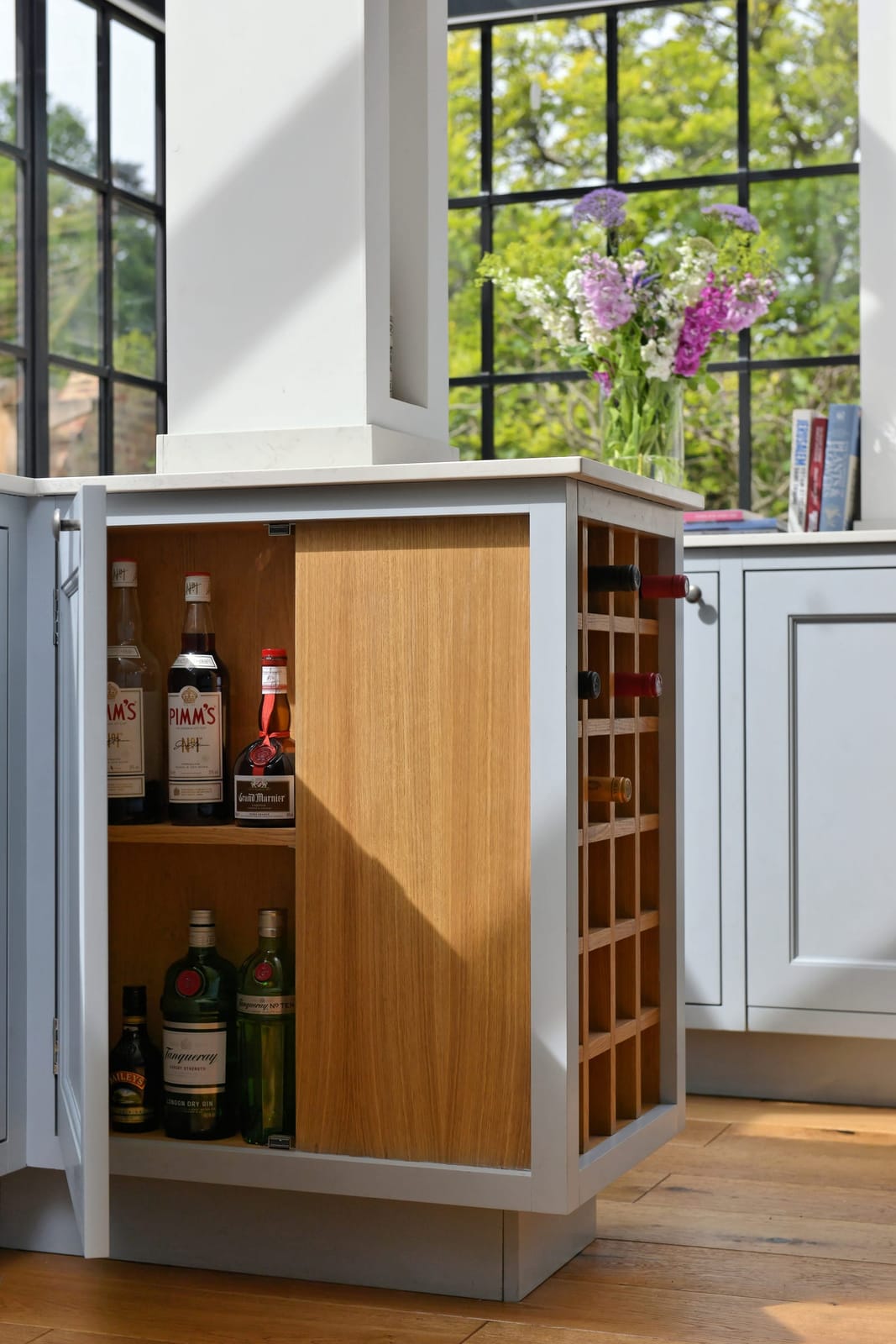
Built to endure: how traditional joinery is made
Traditional kitchens like this are made to last, in structure and in spirit. Solid wood carcasses are paired with hand-fitted, framed cabinetry, built in continuous runs rather than modular boxes.
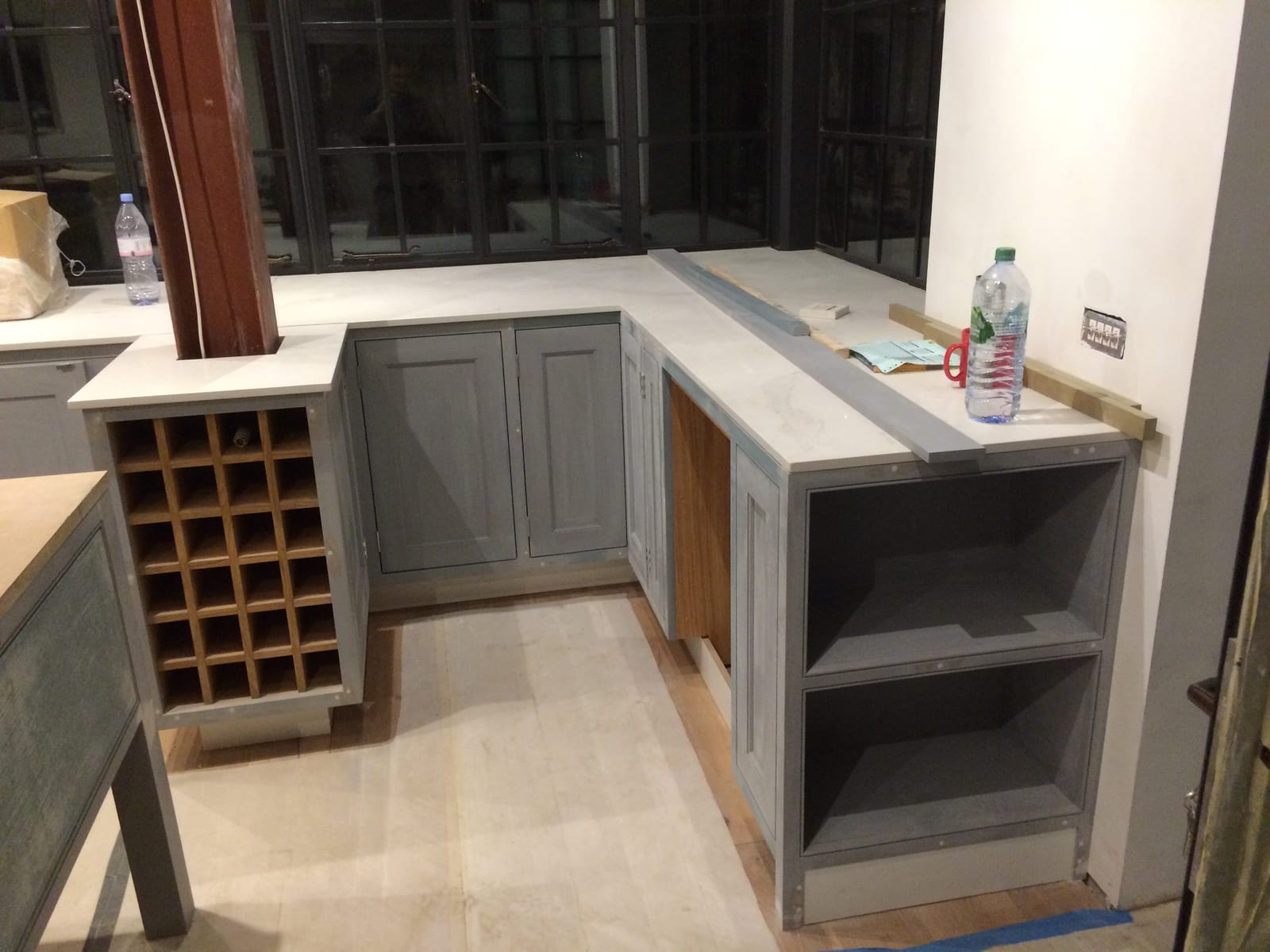
Joints are dovetailed, not screwed. Doors are hung on high-quality butt or piano hinges, which move more smoothly and last far longer than modern clip-on hinges.
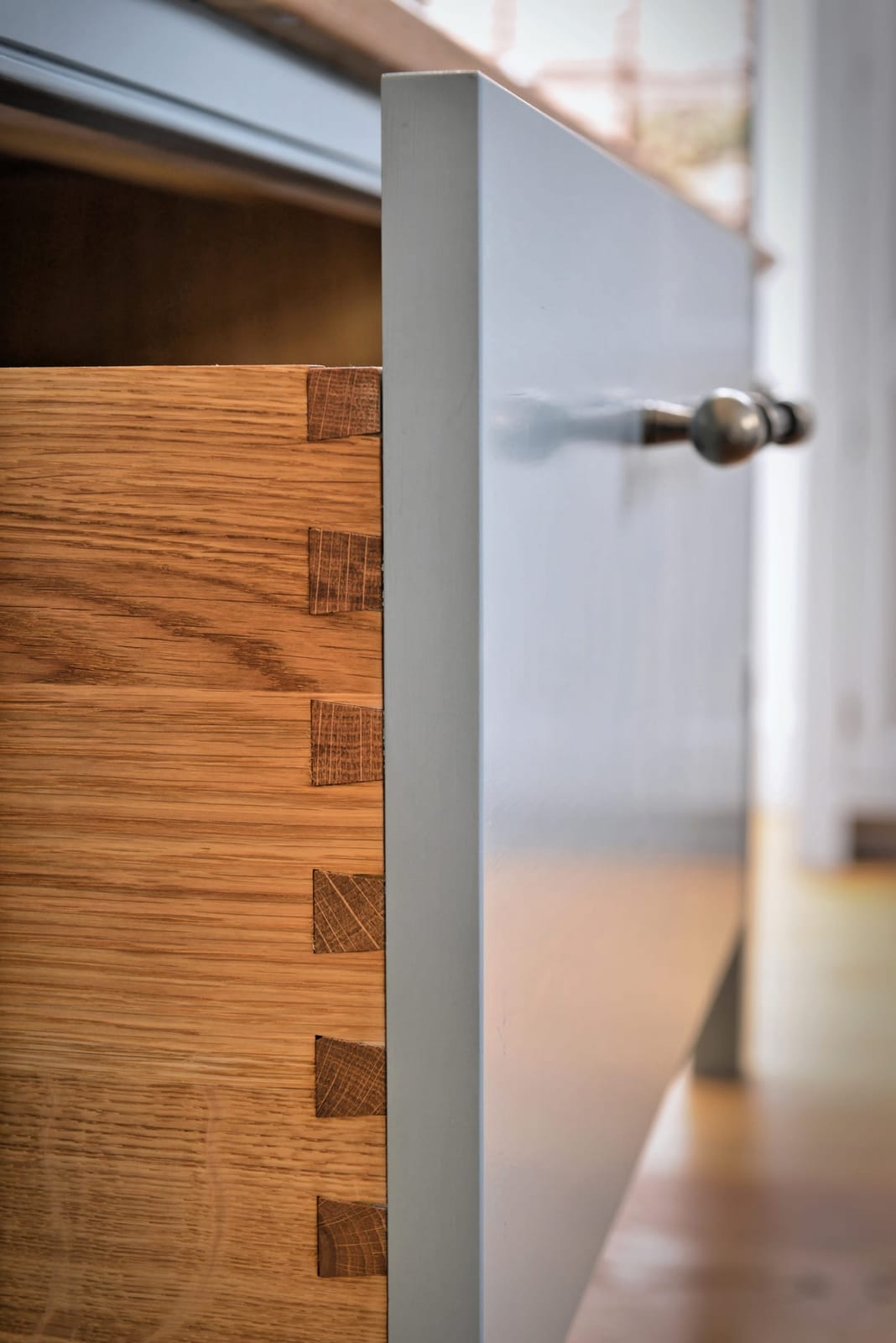
The signatures of truly bespoke joinery are in the details: fine beading around frames and doors, chamfered or bullnose stone worktops, and precise shadow gaps that give the room its quiet rhythm. Cornices, pilasters and recessed plinths can be detailed to suit the architecture of the house, balancing period elegance with contemporary restraint.
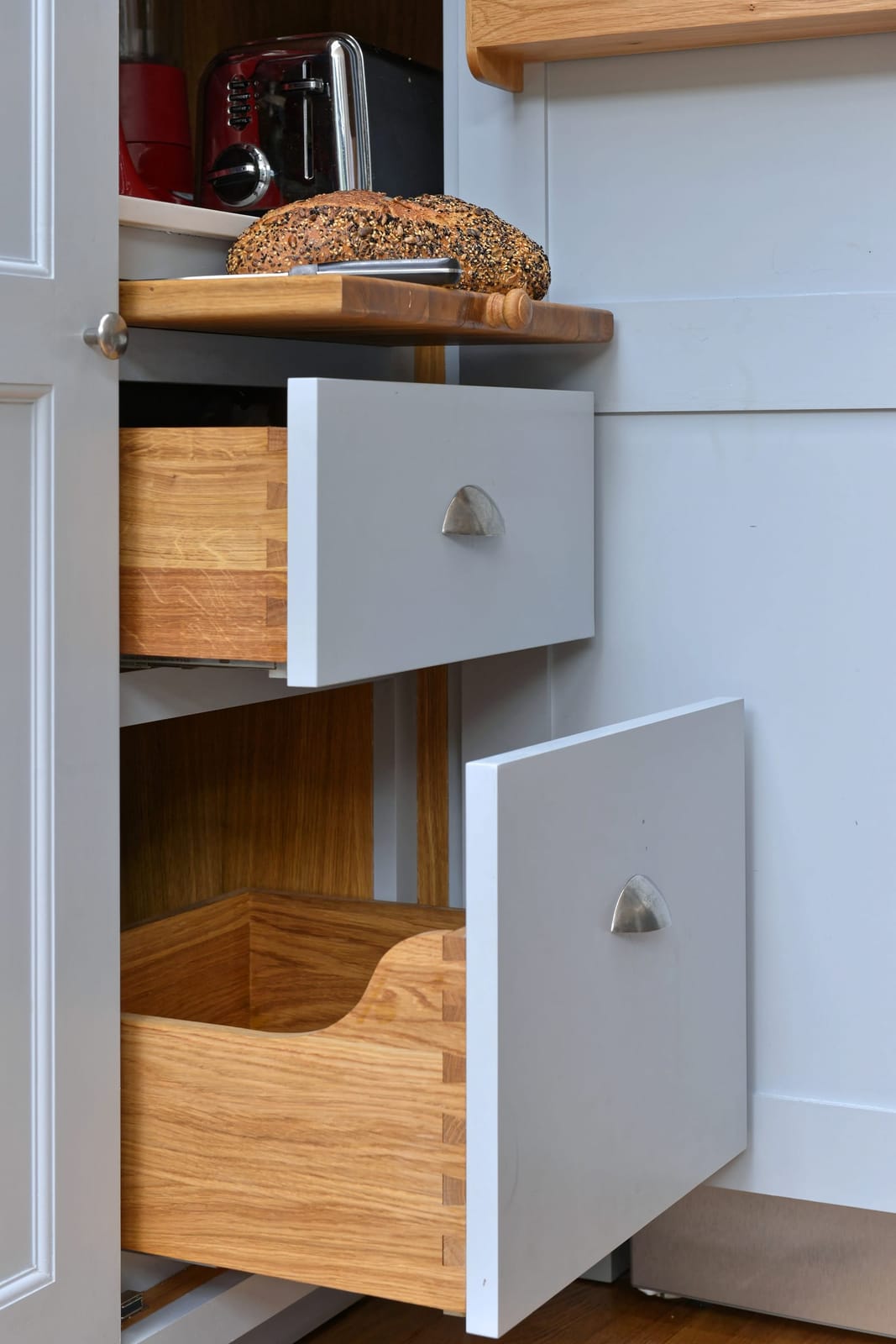
I design every drawer to size: depth, height and function. A hidden inner drawer, an insert for delicate coffee sets and teapots, a bread drawer that keeps the loaf fresh. Nothing off the shelf. No compromises.
Heritage in colour: working with Little Greene
The soul of a traditional kitchen is its colour. Little Greene’s heritage paints go beyond trend: their pigments are drawn from historical archives and natural landscapes, and they have real depth. A chalky sea blue or an olive-toned green brings a quiet richness to cabinetry, and painted by hand, it creates a soft, tactile finish that changes with the light.
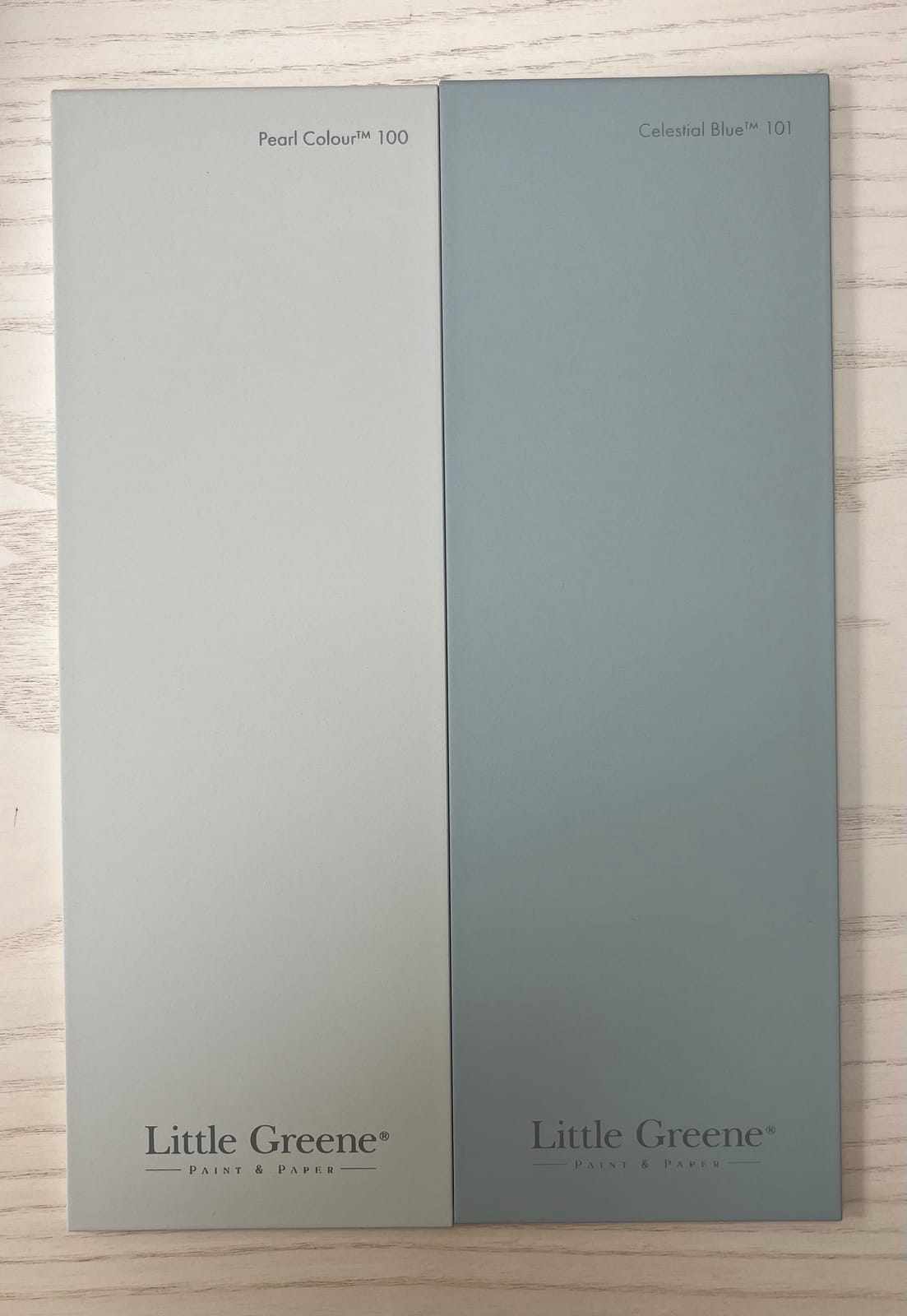
This is why I value working with Little Greene. Their paints need no primer and suit both traditional brush painting and modern spray finishes. Their showroom at 11 Rue de la Liberté in Nice lets us explore the palette in person with clients, in English too.
For this kitchen we chose soft blues. The cabinetry arrived primed, then was hand-painted on site by a specialist painter. Why paint by hand? Because it lasts, and because one day you can change the colour without changing the kitchen. The in-frame cabinetry itself will stand the test of time.
Tradition, reimagined for modern coastal life
A traditional kitchen in a contemporary setting is quietly powerful. In a minimalist space, it adds warmth. In bold architecture, it brings balance.
This kitchen sits in a modern black-framed extension added to a traditional cottage, a seamless flow of old and new. Contemporary stone, modern lighting and carefully chosen handles keep it fresh, while the craft underneath keeps it timeless.
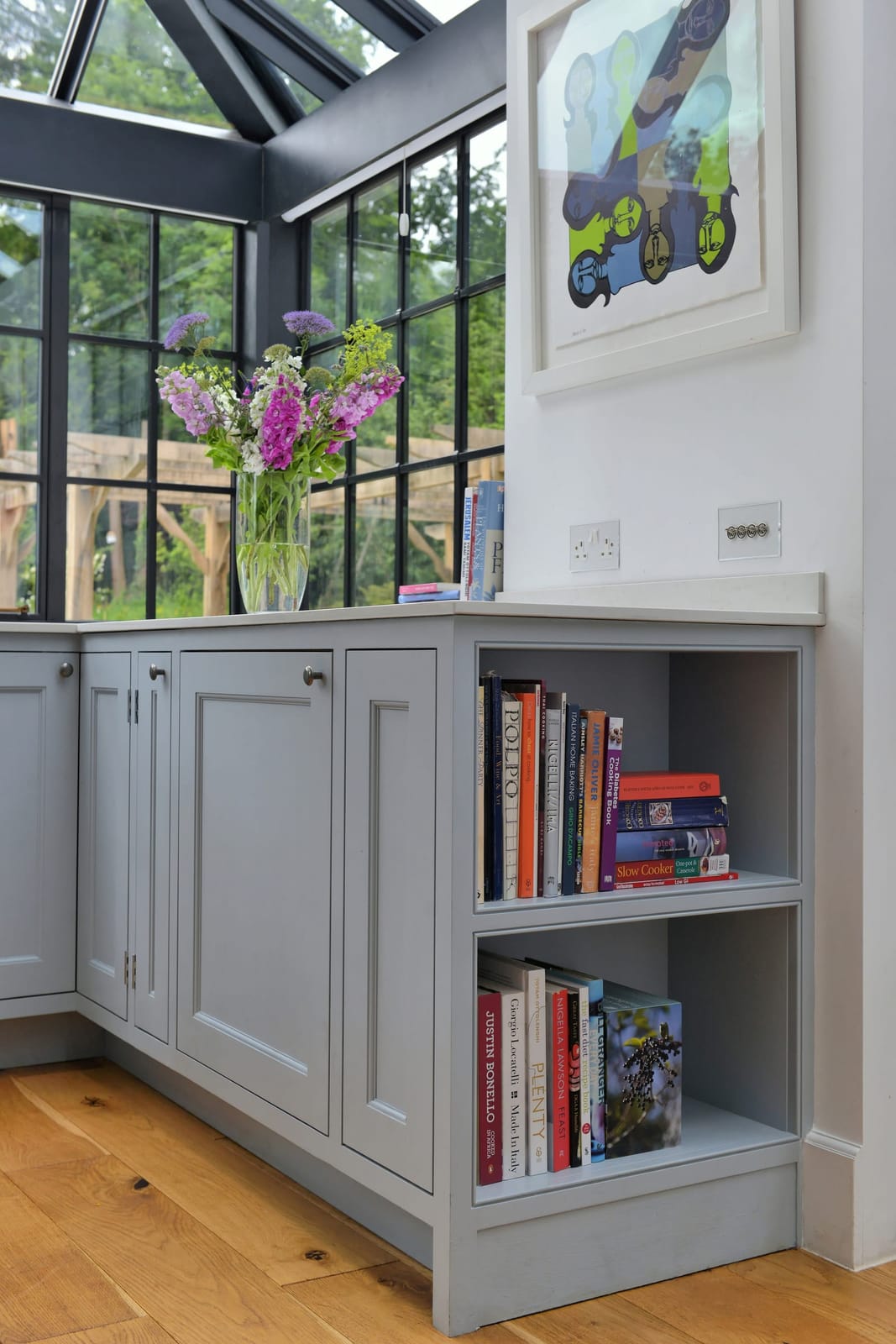
Here on the Riviera, just as in the English countryside, people are reconnecting with quality and slower living. A traditional kitchen made with intention and designed for modern life is a new kind of luxury. One that lasts.
This is Seijaku. In Japanese, it means tranquility.
Questions about traditional kitchens
What is an in-frame kitchen?
An in-frame kitchen has doors and drawers set inside a solid face frame, rather than sitting on top of the cabinet. It is the classic method of traditional English joinery and gives a crisp, precise look with fine shadow lines around every door.
Can a traditional kitchen work in a modern villa on the Riviera?
Yes. In a minimalist or contemporary home, traditional cabinetry adds warmth and texture. Pair it with contemporary stone, modern lighting and simple handles, and it feels current rather than period.
Why hand-paint kitchen cabinetry?
A hand-painted finish has a soft, tactile depth, and it can be repainted. When you want a new colour, you change the paint, not the kitchen.
Where can I see Little Greene colours in Nice?
Little Greene has a showroom at 11 Rue de la Liberté in Nice, where you can see the full palette in person. I often meet clients there to choose colours together.
Can you design a bespoke kitchen for my home in France?
Yes. I design bespoke kitchens for homes on the French Riviera and work with trusted makers and painters. See more of my work in Bespoke Kitchens, or read Home Design Stories: Designing a Truly Bespoke Kitchen and What Is a Wellness Kitchen.
Made by hand, built to last. This is SEIJAKU.
Truly yours,
Jurgita
See the full project and photo gallery: Tradition, Made Personal
Related Reading
Interior Design
5 Things Every Expat Should Know Before Redesigning a Home on the French Riviera
1 March 2026

Interior Design
SEIJAKU Table Stories: Introducing a New Chapter in Calm, Beautiful Living
29 December 2025
Holiday Homes
Designing Escape: Your Holiday Home on the French Riviera
26 July 2025
Stay Inspired